More Insights
De Blasio’s 2030 Ban on Classic Glass presents Opportunity for Wisconsin Start-Up
April 2019
READ MORE
Wisconsin vacuum glass startup to compete in NYC.
PEWAUKEE, WI, May 30, 2018 - V-Glass, a Wisconsin startup, has been selected as a top 10 finalist to present at the NASA iTech Energy competition June 13 and 14 in New York City. The audience will include representatives from NASA, DOE, and potential investors.
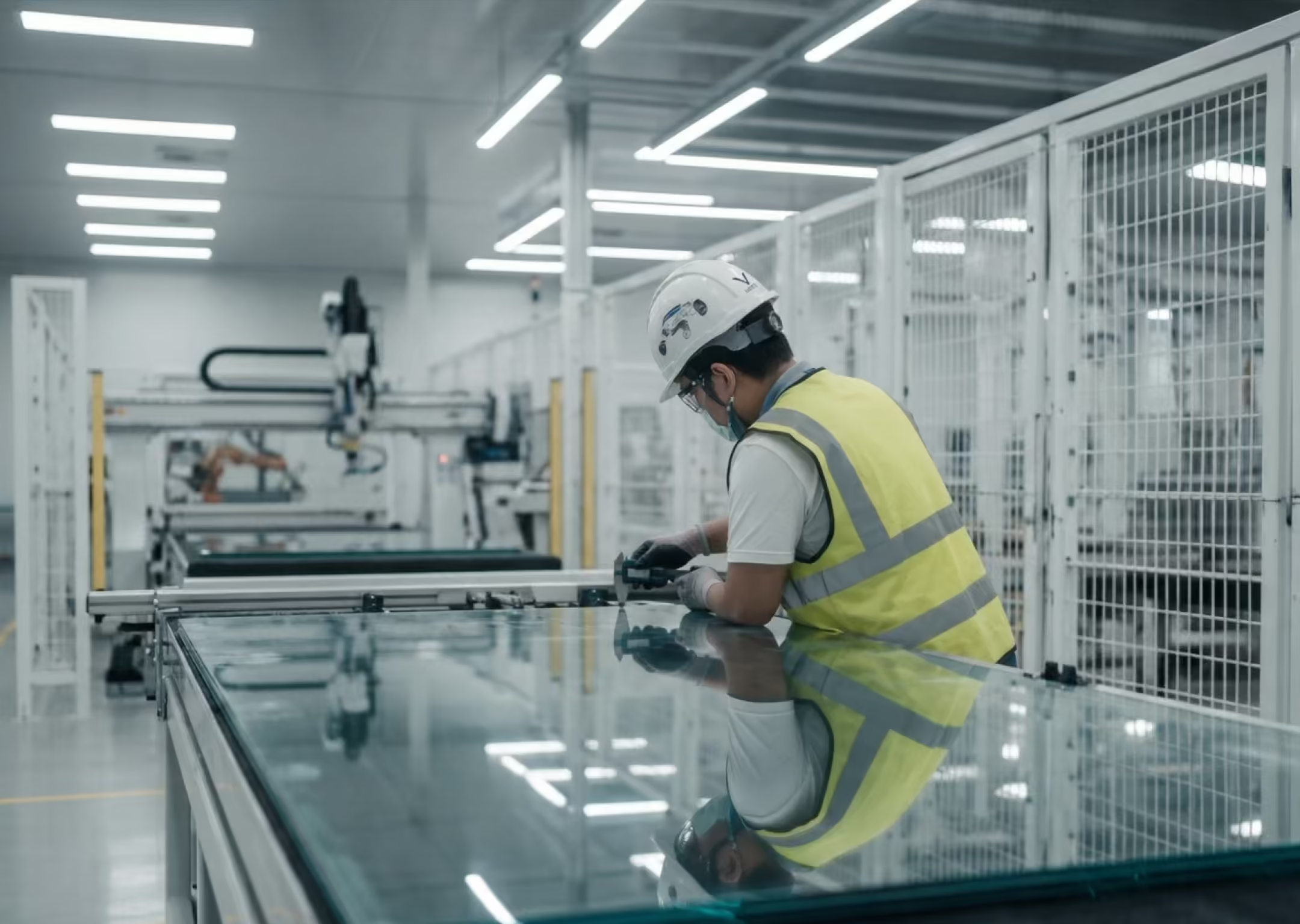
Since 2008, V-Glass has been developing vacuum insulating glass, which is essentially a flat transparent vacuum bottle for highly-insulating windows. The title of the V-Glass presentation is “Vacuum Glass for R-10 Windows,” a reference to a 2022 energy efficiency milestone on the DOE’s windows roadmap.
“Reducing energy use can be smarter than producing and transporting that wasted energy, renewable or otherwise,” said Peter Petit, Founder of V-Glass. “For a NASA spacecraft, it’s a no-brainer, but avoiding energy waste makes sense for spaceship Earth, too. If vacuum insulating glass windows were to achieve full U.S. market penetration, the energy saved would be equivalent to over twice the solar energy generated in the U.S. last year. And, unlike solar panels and windmills, vacuum glass is invisible to the neighbors.”
The purpose of the iTech competition is to highlight innovative U.S.-based energy technologies for use in space and on earth. The finalists were selected by a multi-disciplinary team of experts from NASA and the U.S. Department (DOE) of Energy’s Advanced Research Projects Agency-Energy (ARPA-E).
Further information is available at https://www.nasa.gov/directorates/spacetech/itech/feature/top-10-nasa-itech-energy-cycle-finalists-announced
###
V-Glass is a developer of vacuum insulating glass. Since its founding in 2008, the company has been awarded over $1.6 million in grants from the National Science Foundation, Department of Energy and the UW-Extension SBIR Advance Matching Grant Fund through its partnership with the WI Economic Development Corporation.
NASA iTech is an initiative by the NASA Space Technology Mission Directorate and managed by the National Institute of Aerospace in Hampton, Virginia.