







NEXT-GENERATION VACUUM INSULATED GLASS

Ultra-high thermal performance, engineered for affordability at scale.

V-Glass is developing next-generation vacuum insulated glass with more than 3× the thermal performance of conventional windows, engineered around a targeted production cost comparable to dual-pane glazing.

NEXT-GENERATION VACUUM INSULATED GLASS
SCROLL DOWN

The problem with windows

Buildings lose too much energy through the glass.

Diagram showing a white panel labeled 'Outside' on the left side and 'Inside' on the right side with arrows indicating that some light transmits through the panel.Isometric illustration of a tall, thin, rectangular white door frame with orange borders viewed from an angle.Illustration of a closed, blank white book or notebook standing upright at an angle on a white background.

Buildings account for 39% of U.S. primary energy use and 75% of electricity use. Windows remain one of their largest sources of energy loss.

The challenge is not a lack of higher-performance glazing. It is achieving that performance at a cost, weight and manufacturing complexity that allows the technology to scale.

For decades, the market has been forced to choose between affordability and thermal performance.
Breaking the cost-performance trade-off

Better insulation has always come with a compromise.

Conventional glazing is affordable but thermally limited. More efficient alternatives improve performance, but typically introduce additional cost, weight or manufacturing complexity.

Cost & performance
Manufacturing
Commercial Potential
Embodied Carbon
Ultra-high efficiency, cost comparable to dual pane
New oven free manufacturing approach
Affordable, superior performance drives mass market appeal
Lowest
  • Low carbon manufacturing
  • Longest product life
  • 100% recyclable
Conventional dual-pane glazing
Low cost, low efficiency
Established process
Inexpensive and well established
Medium
  • Low carbon manufacturing
  • Standard product life
  • Organic seal not recyclable
Triple-pane glazing
Higher efficiency, higher cost & weight
Established process, more complex
Slowly gaining share, but has limitations
Higher
  • More glass, added weight
  • Standard product life
  • Organic seal not recyclable
First-generation VIG
High efficiency, very high cost
Costly high-temperature oven process
Limited by high production costs
Highest
  • Huge energy to produce
  • Longer product life
  • Toxic metals in edge seal

Breaking the cost-performance trade-off

More performance from a fundamentally different design and manufacturing model.

Ultra-high thermal performance

Designed to deliver more than 3× the thermal performance of conventional windows.

Lower Targeted production cost

Engineered to approach the manufacturing cost of conventional dual-pane insulating glass.

Longer potential service life

A durable inorganic edge seal designed to avoid degradation mechanisms in conventional windows.

Improved aesthetics

A patented spacer arrangement designed to optimize thermal efficiency and make internal support structures significantly less visually intrusive.

Best for the environment

V-Glass’s low manufacturing energy use, 100% recyclability, and non-toxic materials are meaningful environmental advantages over existing insulated glass technology.

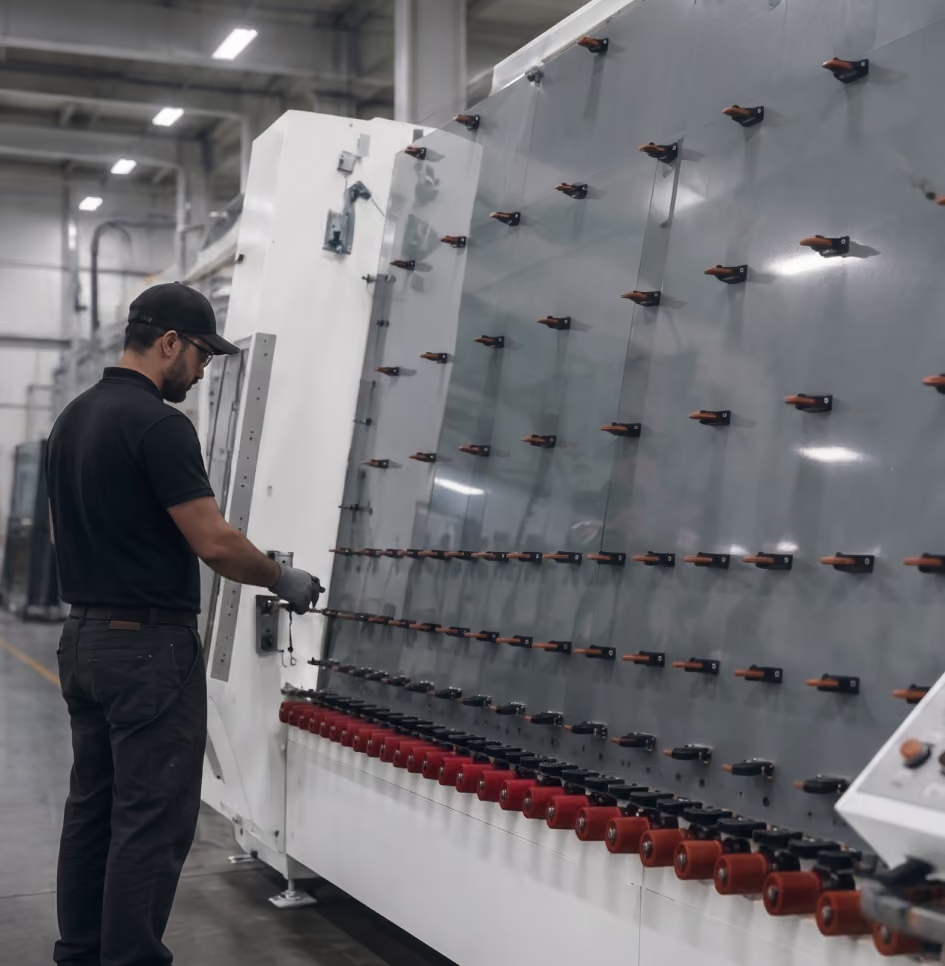
Worker wearing a black cap, shirt, and gloves operating a large vertical glass processing machine in an industrial setting.

One technology. Multiple markets

V-Glass is being developed to integrate into established glazing supply chains across three major application areas.

Front view of a modern two-story house with white siding, stone accents, black shutters, large windows, a black front door under a covered porch with hanging lantern, and landscaped garden with bushes and flowers.

Residential

01

Higher-efficiency windows without forcing homeowners into the traditional cost and weight penalties of high-performance glazing.

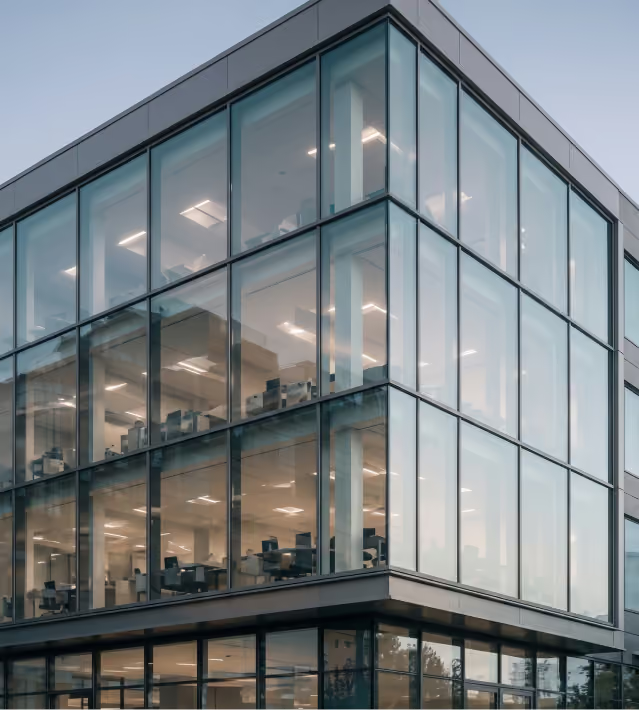
Modern office building with large glass windows showing empty workstations inside during early evening.

Commercial

02

A pathway to stronger building-envelope performance as energy standards continue to rise.

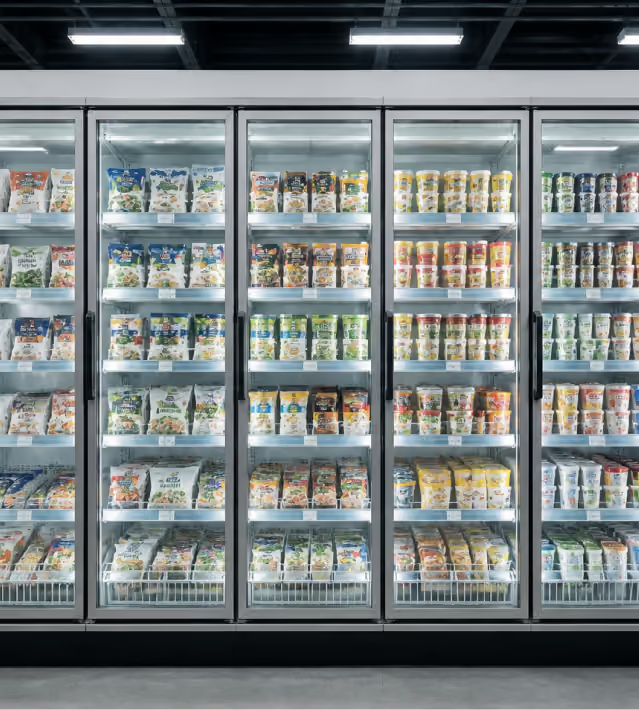
Supermarket freezer section with glass doors filled with various frozen food packages such as vegetables, prepared meals, and soup containers arranged on shelves under bright lights.

Refrigeration

03

Improved thermal insulation for glazed refrigerated displays and other temperature-controlled environments.

HOW IT WORKS

The breakthrough happens at the edge.

The performance of vacuum insulated glass depends on creating and maintaining a durable vacuum between two panes of glass. V-Glass approaches that challenge differently.

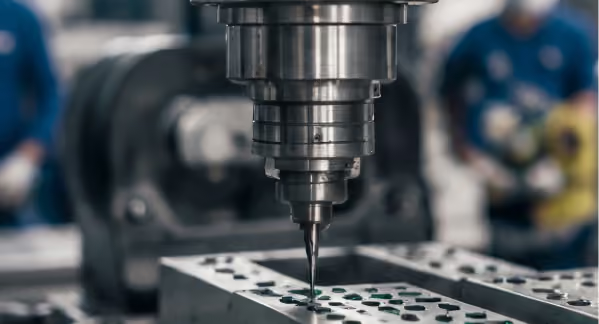
Close-up of a CNC machine drilling holes into a metal block in a factory setting with blurred workers in the background.
01

Create the vacuum space

Two panes of glass are separated by precisely positioned internal supports, creating the narrow evacuated space responsible for the product's high insulating performance.

02

Seal metal directly to glass

V-Glass uses proprietary ultrasonic metal-to-glass welding to create a durable hermetic edge seal.

03

Remove the high-temperature process

Unlike first-generation VIG manufacturing, the V-Glass process is designed to eliminate the costly high-temperature ovens traditionally required to form the edge seal.

04

Built for mass market appeal

By changing how the VIG is sealed and assembled, production processes can be developed with significantly higher manufacturing throughput and lower operating expenses, thereby ensuring V-Glass's mass market appeal.

Performance designed around what matters

Higher performance without the traditional trade-offs.

3×+ thermal performance

V-Glass is designed to deliver more than three times the thermal performance of today's conventional windows, reducing heat transfer through one of the building envelope's weakest points.

Cost comparable to conventional glazing

The manufacturing process is being developed around a clear commercial target: production economics that can approach today's dual-pane insulating glass.

Longer potential life

The inorganic sealing system is designed for significantly longer service life than conventional gas-filled insulating glass, eliminating the degradation associated with organic edge seals.

Cleaner aesthetics

V-Glass uses whisker-like internal supports and a patented positioning pattern designed to optimize thermal performance and minimize the visible spacer effect associated with first-generation VIG.

100% recyclable architecture

Glass and metallic components allow the product to be designed around materials that can be recovered and recycled.

Evidence before scale

Not a concept. A technology being proven for market.

[01]

Government-backed development

Funding support from the U.S. Department of Energy, Department of Defense, National Science Foundation and State of Wisconsin.

[02]

Third-party testing

The V-Glass VIG has passed rigorous thermal performance and durability testing in our lab, and at third-party facilities.

[03]

National Lab and universities collaboration

Technical collaboration and testing involving U.S. D.O.E National Laboratories and universities.

Logos of multiple research institutions arranged in two rows, including Lawrence Berkeley National Laboratory, University of Pennsylvania, Oak Ridge National Laboratory, University of Calgary, University of Wisconsin, and Pacific Northwest National Laboratory.
[04]

Manufacturing development

V-Glass is developing the automation and production technology required to move from prototype manufacturing towards large scale commercialisation.

[05]

Demonstration activity

The company is building its backlog of demonstration projects as it advances its technology readiness.

Speak with our team

Latest from V-Glass

Research, funding and company progress.

Industry Insights

The Future of CMS

October 2023
READ MORE

Built by people who solve hard problems

Help bring a new generation of glazing to market.

Join a small team where engineering decisions have a direct impact on the technology, the product and the path to market.

Automation Engineer

Full-Time
Waukesha, WI
Apply now

Senior Research Scientist

Full-Time
Waukesha, WI
Apply now
No items found.
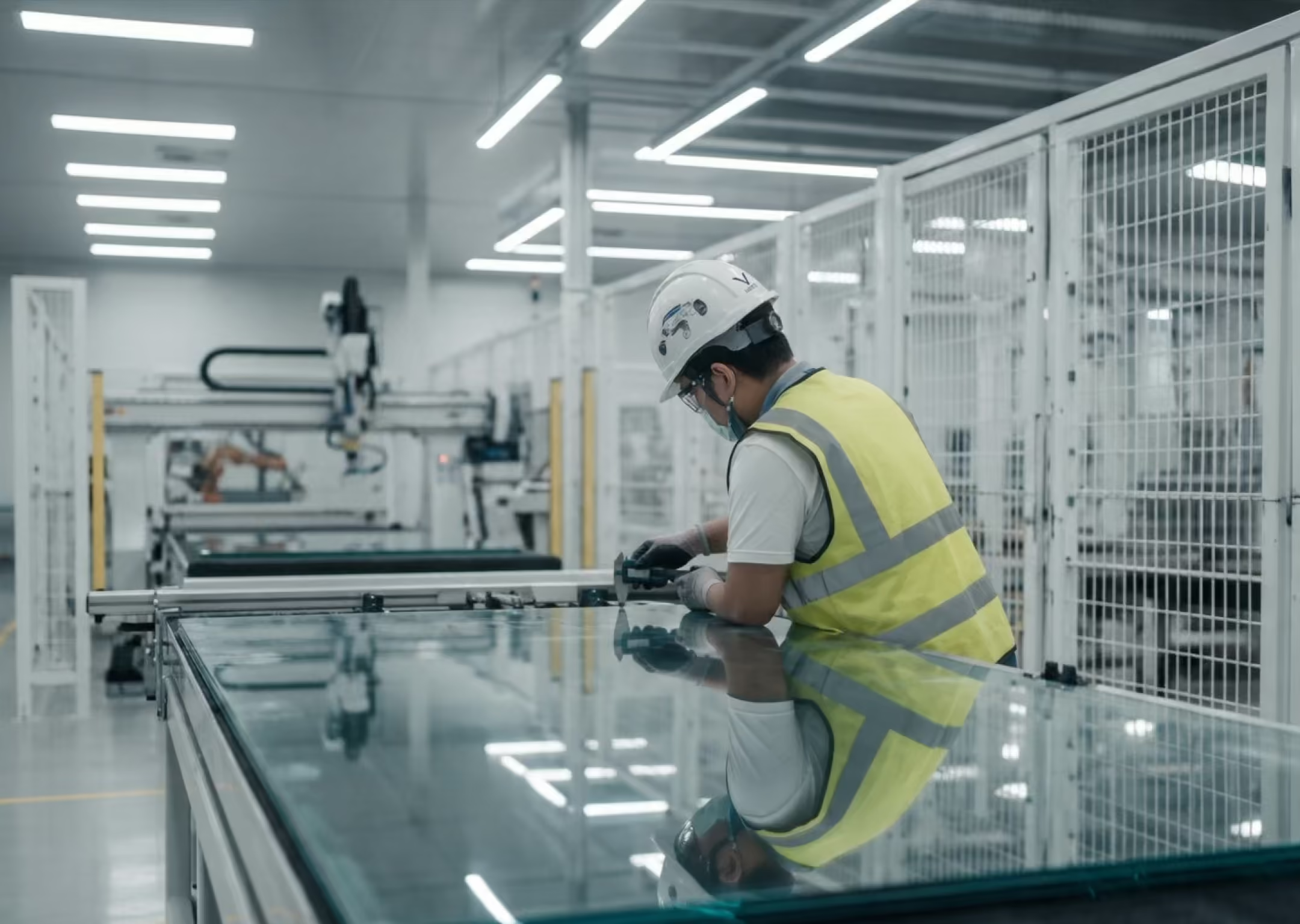
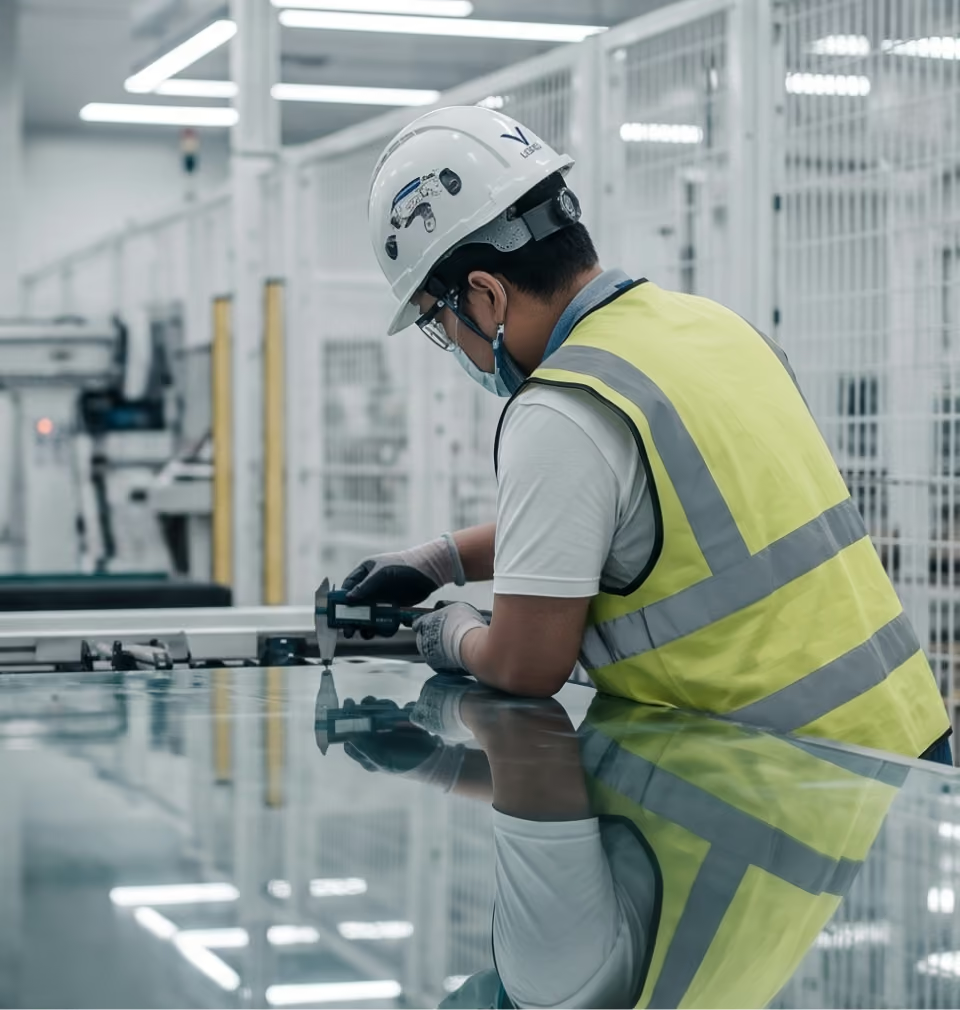
Man wearing a white hard hat, fluorescent yellow safety vest, gloves, and face mask inspecting a reflective surface with a measuring tool in a bright industrial setting.

Start a conversation about bringing V-Glass to market.

V-Glass is building relationships with organisations that can help validate, manufacture, fund and commercialise the technology.

If you are exploring investment, licensing, manufacturing, research collaboration or a potential demonstration opportunity, get in touch.

Start a conversation